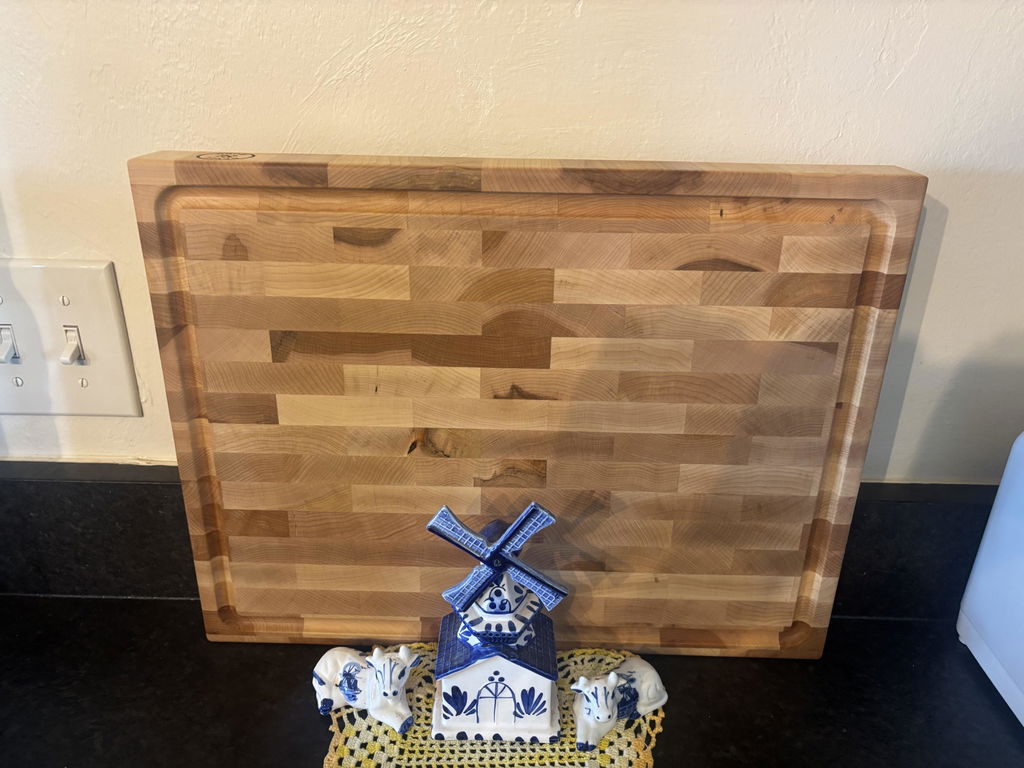
A cutting board coming apart at a glue line is usually the board telling you it spent too long wet. A hairline gap can sometimes be cleaned, clamped, and re-glued with a food-safe waterproof glue. A joint that has fully let go along a food-contact surface is hard to fix food-safely at home, and the honest move is to retire or demote the board.
I have re-glued plenty of joints over ten years at the bench, and I will tell you up front: the repairs that hold are the ones where the joint barely opened and the board was otherwise sound. The repairs that come back to bite you are the ones where someone soaked a board overnight, popped a seam wide open, and wanted it good as new for raw chicken. Know which one you have before you reach for the clamps.

| Cause of the separation | Can you fix it at home? | How to prevent it |
|---|---|---|
| Dishwasher or long soak | Rarely food-safe once fully open; usually retire or demote | Hand wash only, never soak |
| Prolonged moisture, stored wet | Hairline gap: sometimes; wide gap: no | Towel dry, lay flat, oil regularly |
| Inferior glue or poor build | Re-glue possible but the rest of the joints may follow | Buy boards built with food-safe PVA |
| Heat: dishwasher element, stovetop, oven | Depends on depth; heat plus moisture is the worst combo | Keep the board away from heat sources |
Can you actually re-glue a cutting board at home?
Sometimes, and only if the gap is a hairline and the board is otherwise solid. If you can slip a sheet of paper into a seam but the board still holds together and does not flex, you have a candidate for repair. Clean the joint, work a food-safe waterproof wood glue into it, clamp it flat for 24 hours, scrape the squeeze-out, and re-oil once the glue has fully cured. Titebond III is the glue most woodworkers reach for here because it is waterproof and rated food-contact safe once cured.
What you cannot reliably do at home is re-glue a joint that has already opened all the way through. To do that properly you would need to separate the joint fully, plane both faces dead flat, and re-glue under real clamping pressure, which is factory work, not kitchen-counter work. A joint you just smear glue into and squeeze will look closed and fail again in a month. If the board is a well-built end-grain board that suffered one bad soak, a hairline repair is worth a shot. If it is a thin bargain board, the repair costs more in glue and clamps than the board is worth.
Why did the glue joint separate in the first place?
Almost always water, heat, or a cheap glue, and often all three at once. Wood glue holds because it grips the wood fibers, and prolonged moisture swells those fibers, works the bond loose, and lets the joint creep apart. A dishwasher is the perfect storm: soaking water, blasting heat, and hours of it. That is why we tell every customer the dishwasher is where good boards go to die.
The other culprit is the build itself. A board glued up with a water-resistant PVA and proper clamping pressure rarely separates under normal use. Our boards use a food-safe PVA and a double glue-up for exactly this reason. A board assembled with the wrong glue, or not clamped hard enough at the factory, carries a weak joint from day one and gives out the first time it gets abused.
Which glue is safe to use on a cutting board?
A food-safe, waterproof PVA wood glue, and Titebond III is the common choice once it has fully cured. Cured PVA glue is inert and rated safe for indirect food contact, which is what you want on a surface that touches raw ingredients. Do not use construction adhesive, epoxy you cannot verify as food-safe, hot glue, or anything with a solvent smell.
The word that matters is cured. Fresh glue is not something you want near food, so a proper repair means clamping for a full 24 hours and letting the glue reach full strength before the board goes back into service. Rushing the cure is how you end up with both a weak joint and a questionable surface. When the joint is closed, cured, and re-oiled, treat the board to a normal care routine and it may give you years more. Our cutting board maintenance guide keeps the remaining joints from following the first one.
Honestly, the math on a failed board often favors replacement over repair. A hairline fix is worth an evening. A board that has come apart at multiple joints has told you how it was built, and a board made with food-safe PVA and a 5-year warranty will outlast three of the ones you keep gluing back together. Browse the full collection if your current board has become a weekend project instead of a kitchen tool.
How do you know if a joint is worth saving?
Push on both sides of the gap with your thumbs. If the board is rigid and the gap is a thin line, it is worth saving. If the two halves rock, flex, or move independently, the joint is structurally gone and no home repair will bring it back safely. A board that flexes at the seam will keep working that seam open every time you press a knife into it.
The second test is depth. Slide a thin blade or a business card into the gap. If it stops after a couple of millimeters, the separation is shallow and a clamp-and-glue repair can close it. If the card slides most of the way through, the joint has failed across its width and you are past a countertop fix. Be honest with yourself here, because a repair that fails on raw meat is worse than no repair at all.
What happens if you put a wood board in the dishwasher?
You cook the glue and swell the wood, and the joints let go. The dishwasher combines everything that destroys a glued board: standing water, a 140-degree-plus wash and heated dry cycle, and a run time measured in hours. Wood that spends that long hot and soaked swells, the glue bond gives, and the board comes out with open seams, a warped face, or both.
A dishwasher cycle can cause severe moisture and heat stress that may warp, crack, or separate a wood board. This is the single most common cause of separated joints I see, and it is completely avoidable. Hand wash with warm water and mild soap, rinse, towel dry, and stand the board on edge to finish drying. The whole thing takes 30 seconds and it is the difference between a board that lasts and a board that becomes a repair project.
Can you still use a board after a joint separates?
It depends entirely on whether the repair closed the seam completely and safely. A joint you re-glued to a tight, cured, sealed line is fine for continued use. An open seam, even a repaired one that still shows a crevice, is a trap for food and water and a poor surface for raw meat. When in doubt, demote the board to bread, cheese, and produce and keep raw proteins on a sound surface.
If the board is beyond saving as a cutting surface, it is not garbage. A separated board still serves as a trivet, a serving or charcuterie board for dry foods, or a bread board. It just should not be the surface where you break down a chicken.

How do you re-glue a hairline joint step by step?
Clean, glue, clamp, cure, oil. Start by cleaning any oil, food, and grime out of the gap and letting the board dry fully for a day or two, because glue will not bond to an oily or wet joint. Work a food-safe waterproof glue into the gap with a thin blade or a sliver of card, then clamp the board flat and tight until glue squeezes out along the whole seam.
Wipe the squeeze-out, leave the clamps on for a full 24 hours, and do not rush it. Once cured, scrape any dried glue off the surface, sand the area flush with 220 grit, and re-oil the whole board so the color evens out. Then baby it: hand wash only, dry flat, and oil on schedule so the repaired joint never sees the abuse that opened it.
Is Titebond III food safe for cutting boards?
Yes, once fully cured. Titebond III is a waterproof PVA glue rated safe for indirect food contact after it reaches full cure, which is why it is the standard choice for repairing and building cutting boards. Cured PVA is inert. The key word is cured, so give any repair a full 24 hours under clamps before the board touches food again.
Why do cheap cutting boards fall apart at the seams?
Weak glue, thin stock, and not enough clamping pressure at the factory. Budget boards are often assembled fast with a water-resistant glue instead of a waterproof one, and they are pressed together with less force than a durable joint needs. The seam holds long enough to sell the board and gives out the first time the board sits wet. A board built with a food-safe PVA, a double glue-up, and a full 1.75-inch thickness is engineered so the joints outlast the surface.
Can a separated joint be sanded closed instead of glued?
No. Sanding removes material, it does not pull a joint back together, so all you get is a shallower version of the same open seam. A separation is a bond failure, and the only real fix is re-establishing the bond with glue and clamping pressure. Sanding is a finishing step after a glue repair, never a replacement for one.
When was this article last reviewed?
This article was last reviewed in July 2026 by the Bevel & Bond workshop team. We test our repair advice on real boards at the bench and against what comes back through customer service, and we revise these guides when the results change.
A well-built board and a little discipline mean you never read this article twice. Hand wash, dry flat, oil on schedule, and keep the board out of the dishwasher. If yours is past saving, our end-grain maple cutting board is built with food-safe PVA and backed by a 5-year warranty, and the rest of the lineup lives in our collection.