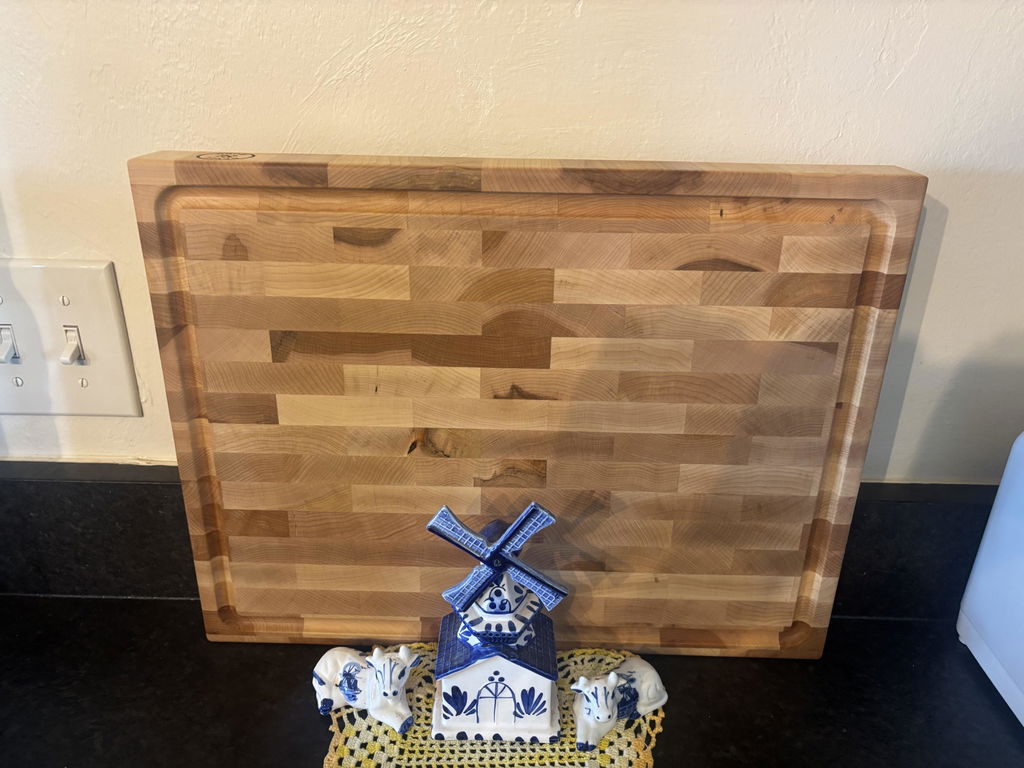
For most kitchens, hard maple is the better cutting board. Hinoki, the aromatic Japanese cypress prized in sushi kitchens, is soft, kind to knife edges, and associated with antibacterial properties in some laboratory research, but it dents under normal Western chopping and needs fussier care. Maple gives you 1,450 lbf of Janka hardness, a hard-wearing end-grain surface, and a board that shrugs off daily abuse. Buy hinoki if you slice fish and delicate produce with a light hand and love the cypress aroma. Buy maple if you want a thicker, durable board for a wide range of prep work. Both woods are graded against ten others in the full wood ranking.
This comparison comes up because hinoki has a cult following, and deservedly so within its lane. Walk into a traditional sushi counter in Japan and the board is hinoki, resurfaced with a hand plane between services. That is the context it was built for: light, precise knife work by someone who maintains the board daily. Drop that same board into a home kitchen where it takes a cleaver to a butternut squash, and it gets chewed up fast.

What is the difference between hinoki and maple cutting boards?
The core difference is softwood versus hardwood. Hinoki (Chamaecyparis obtusa) is a softwood cypress, light, aromatic, and gentle, with natural oils that resist bacteria and mold. Hard maple (Acer saccharum) is a dense hardwood, at least twice as hard, that resists denting and scarring far better. One is a specialist, the other is a generalist.
| Feature | Hinoki (Japanese cypress) | Hard maple |
|---|---|---|
| Wood type | Softwood | Hardwood |
| Janka hardness | ~500 to 800 lbf (commonly cited near 600) | 1,450 lbf |
| Knife-friendliness | Exceptional, very soft | Excellent |
| Dent and scar resistance | Poor | Excellent |
| Natural antibacterial oils | Yes (hinokitiol) | Closed grain, no natural oils |
| Best use | Fish, delicate produce | Everything, daily heavy use |
| Care demand | High | Moderate |
The hardness numbers tell the story, with one honest caveat: published Janka figures for hinoki don't agree. Most sources land near 600 lbf, and the quoted range runs from roughly 500 to 800 depending on the source. Wherever it falls in that band, hinoki is far softer than hard maple. That softness is exactly why sushi chefs love it, since it cradles a razor-thin yanagiba edge, but it also means a heavy Western chef's knife leaves visible cuts almost immediately.
Is hinoki or maple more knife-friendly?
Hinoki is gentler on knife edges, but the gap matters less than people think. Both woods are far kinder to steel than bamboo, glass, or plastic. Hinoki's extreme softness means near-zero edge wear, which is why it pairs with expensive single-bevel Japanese knives. Maple at 1,450 lbf is still excellent for edges, especially in end-grain form where the blade parts the fibers instead of slicing across them.
If protecting a $300 hand-forged yanagiba is your top priority, hinoki has the edge. For a kitchen running German or Western knives through daily prep, maple protects the edge plenty while giving you a surface that survives the work. The hard-wearing behavior of end-grain maple is covered in our end-grain vs edge-grain article.
Which board is more durable, hinoki or maple?
Maple wins durability without a contest. Hinoki dents, scratches, and wears down quickly because it is a soft cypress, and traditional users expect to resurface it with a plane regularly. Hard maple resists that damage, and a thick end-grain maple board is designed for years of daily chopping with proper care with only occasional sanding.
A hinoki board is a consumable in a way maple is not. Sushi kitchens treat it as a surface to be maintained and eventually replaced, part of the craft. A home cook who wants to buy once and keep the board for the life of the kitchen is describing maple, specifically a 1.75-inch end-grain board that has the thickness to be sanded flat again and again.
How do you care for a hinoki cutting board?
Wash hinoki quickly with water and a soft brush, wipe dry at once, and stand it on edge to air out fully. Hinoki care is stricter than maple because the soft, absorbent wood swells and stains if it stays wet. Do not soak it, do not put it in a dishwasher, and keep it out of direct sun, which can crack the cypress.
- Rinse fast, dry faster. Never let a hinoki board sit in a wet sink. Wipe it and stand it upright immediately.
- Skip the soap when you can. Hinoki's natural hinokitiol oils resist bacteria, and heavy soap strips the surface. A quick scrub with hot water and a brush is the traditional method.
- Do not oil it like maple. Hinoki is meant to stay bare, unlike maple, which needs regular mineral oil. Oiling hinoki traps its aroma and muddies the surface.
- Sand or plane lightly when it scars. A light hand-sanding with fine grit refreshes the surface and revives the cypress smell.
- Watch for warping. Because it is soft and light, hinoki can warp if one side dries faster than the other. Dry both faces evenly.
That last-mile care is the real reason to think twice. Maple asks for a wipe-down and an oiling every few weeks. Hinoki asks for attention after every single use.
Want the antibacterial, knife-friendly benefits without the fragile care routine? Our hard maple end-grain board gives you a tight, sanitary closed-grain surface at 1,450 lbf, backed by a 5-year warranty. See the full collection.

Is hinoki associated with antibacterial properties in some laboratory research?
Yes, hinoki contains hinokitiol, a natural compound with antibacterial and antifungal activity reported under some laboratory conditions. This is one of its genuine advantages and part of why it is trusted for raw fish. Maple does not have natural antibacterial oils, but its tight closed grain and lack of moisture retention make routine cleaning practical; this does not mean maple sanitizes itself or eliminates the need for proper food-safety practices.
For raw fish specifically, hinoki's oils are a nice bonus. For general prep, a well-maintained maple board that gets washed and dried is fully sanitary. Any potential laboratory-observed antibacterial property does not automatically outweigh maple's durability for everyday cooking.
Which should you buy for a home kitchen?
Buy maple as your main board, and add a hinoki board only if you cut a lot of raw fish. For 95% of home cooks, a thick end-grain hard maple board is the right single purchase. It handles vegetables, bread, raw meat, and carving, it survives the occasional heavy chop, and it can provide many years of service with proper care. Hinoki is a beautiful, specialized second board for sushi and sashimi work.
If the cypress aroma and the sushi-counter romance pull at you, get a small hinoki board for fish and keep it for that. Just do not make it your only board, because its softer surface and lighter construction suit a different use case from a thick maple workhorse. The smart kitchen has a maple workhorse and, for those who want it, a hinoki specialist.
How long does a hinoki cutting board last?
Hinoki and hard maple wear differently, but neither has a universal replacement schedule. Service life depends on thickness, construction, use, resurfacing, environment, and care. Hinoki's softer surface may wear and thin faster with repeated resurfacing, while a thick hard maple board offers more material for long-term repair.
Does hinoki smell, and does the smell fade?
Hinoki has a distinct fresh, lemony-cedar aroma, and it does fade with use but revives with a light sanding. The scent comes from the wood's natural oils. Many owners find it pleasant and even use hinoki bath products for the same smell. Maple has almost no aroma, which some cooks prefer for keeping food flavors clean.
Why do sushi chefs use hinoki cutting boards?
Because hinoki's extreme softness protects razor-thin single-bevel knives and its natural hinokitiol oils resist bacteria on raw fish. The soft cypress cradles a yanagiba edge with almost no wear, and chefs plane the surface fresh between services. It is the right surface for delicate, precise fish work, which is exactly the job it was made for.
Do you need to oil a hinoki cutting board?
No. Unlike maple, hinoki is meant to stay bare, since oiling traps its aroma and muddies the surface. Care for it by washing quickly, drying immediately, standing it on edge, and hand-sanding lightly when it scars. This is the opposite of maple, which needs food-grade mineral oil every few weeks.
Is hinoki worth it for a home cook?
Only as a specialized second board for raw fish, not as your main board. Its softness and demanding care make it a poor everyday workhorse in a Western kitchen. Buy a hard maple board as your primary surface, and add a small hinoki board only if sushi and sashimi are a regular part of your cooking.
When was this article last reviewed?
This comparison was last reviewed in July 2026 by the Bevel & Bond workshop team and reflects our current view on hinoki cypress and hard maple for kitchen use.
Want one board designed for a wide range of prep work and durable service? The Bevel & Bond hard maple end-grain cutting board is 1.75 inches of American Acer saccharum, knife-friendly and backed by a 5-year limited warranty. Browse the full collection here.