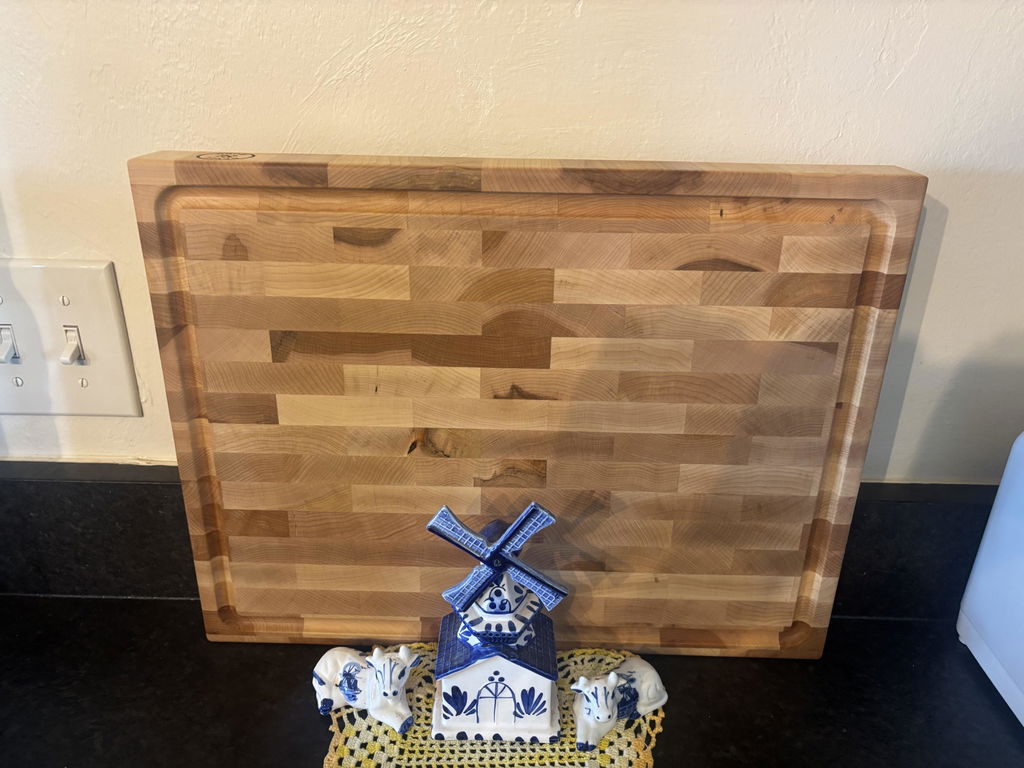
What Is a Maple Cutting Board? (Quick Answer)
A maple cutting board is made from tight-grained, durable American maple that naturally resists bacteria, protects knife edges, and develops a warm golden patina over time. Maple boards are known for their strength, cleanliness, and long-lasting performance — making them one of the safest and most popular woods for kitchen prep.
Maple Cutting Boards: Benefits, Care, and Patina
Maple cutting boards have earned their place as a staple in both professional and home kitchens. Known for their durability, clean appearance, and tight grain, maple wood delivers exceptional performance without sacrificing beauty. In this guide, we'll explore the benefits of maple cutting boards, how to care for them, and how to maintain their warm, natural patina over time.

1. Why Choose Maple?
Maple is one of the most trusted hardwoods for food preparation. Its combination of hardness, stability, and light color makes it ideal for cutting boards.
Key reasons cooks love maple:
-
Clean, Bright Appearance: Maple's pale, creamy tone keeps your kitchen looking fresh and modern.
-
Tight Grain Structure: Naturally resists bacteria and moisture penetration.
-
Perfect Hardness: Hard enough to last years, yet gentle on knives.
-
Consistent Texture: Smooth surface makes chopping precise and pleasant.
Bevel & Bond's maple boards highlight the wood's natural clarity and warmth, making them both functional and beautiful.

2. Benefits of Maple Cutting Boards
Knife-Friendly Surface
Maple provides a balanced cutting surface that protects your knife edges while resisting deep cuts and scratches.
Durability That Lasts
Thanks to its density and tight grain, maple can withstand heavy daily use without warping or splintering — especially when properly conditioned.
Naturally Hygienic
The small, closed pores in maple limit liquid absorption and help prevent bacteria from settling into the surface, making it one of the safest woods for food prep.
Versatile for All Kitchen Tasks
From chopping vegetables to slicing meats to serving charcuterie, maple is an all-purpose material that performs beautifully.
Aesthetic Appeal
Maple's understated, light-toned beauty fits effortlessly into minimalist, modern, rustic, and traditional kitchens alike.

3. Caring for Your Maple Cutting Board
Proper care keeps your board smooth, sanitary, and hydrated.
Basic Care Routine:
-
Wash by Hand: Use mild soap and warm water. Never soak or dishwash.
-
Dry Immediately: Prevents moisture absorption and warping.
-
Condition Regularly: Apply Bevel & Bond Board Balm every 3–4 weeks.
-
Avoid Excess Heat: Keep away from stoves, dishwashers, and sunny windows.
Consistent conditioning enhances the wood's richness while extending its lifespan.

4. Understanding Maple Patina
Over time, maple develops a gentle patina — a warm, golden hue created by oils, light exposure, and natural wear.
Why Patina Is Good:
-
Adds depth and character
-
Reflects your board's history
-
Does not affect safety or performance
How to Maintain a Beautiful Patina:
-
Condition regularly with board balm
-
Avoid harsh cleaners
-
Embrace light surface marks — they blend gracefully as the patina matures
The patina is part of what makes hardwood boards special — they age like fine furniture.
5. When to Refresh or Refinish
If your maple board starts looking dry or heavily scratched, you can revive it easily:
-
Lightly sand with 150–220 grit
-
Remove dust
-
Apply a generous layer of Bevel & Bond Board Balm
-
Let absorb overnight, then buff
Your board will return to a smooth, rich finish with a renewed tone.

Conclusion
A maple cutting board offers exceptional performance, clean aesthetics, and long-term reliability. With proper care and conditioning, your Bevel & Bond maple board will develop a gorgeous patina and serve you beautifully for years — whether you're prepping dinner or presenting charcuterie.
👉 Experience the beauty and craftsmanship of Bevel & Bond Maple Cutting Boards — shop the collection here.
Shop all Bevel & Bond cutting boards
Is maple a good wood for a cutting board?
Yes, hard maple is one of the best woods you can pick for a cutting board. At Janka 1,450 lbf it is dense enough to resist gouging and daily wear, yet still forgiving on your knife edge. Its tight, closed grain limits how much liquid soaks in, which is a big part of why maple is considered one of the easiest prep surfaces to keep clean.
Is maple harder than walnut for cutting boards?
Yes, hard maple is harder than walnut. Maple comes in around Janka 1,450 lbf while American walnut is about 1,010 lbf, so maple stands up to heavier abuse and stains less. Walnut is softer and a touch easier on knives, but maple is the more durable, stain-resistant everyday workhorse.
Why does my maple cutting board change color over time?
That warm, golden shift is patina, and it is completely normal and harmless. Maple deepens from its pale, creamy tone as oils from conditioning, light exposure, and everyday use build up in the grain. The patina does not affect safety or performance, and many owners come to prefer the aged look over the raw one.
How do you clean and maintain a maple cutting board?
Hand wash with mild soap and warm water, dry it right away, and condition it every 3 to 4 weeks. Never soak it or put it in the dishwasher, and keep it away from stoves and sunny windows where heat can dry it out. A regular coat of food-grade mineral oil or Board Balm keeps the surface hydrated and crack-free.
How do you refinish a scratched maple cutting board?
Sand it lightly, dust it off, and re-condition it. Work over the surface with 150 to 220 grit sandpaper in the direction of the grain, wipe away all the dust, then apply a generous layer of Board Balm and let it soak in overnight before buffing. That routine brings a dry, scratched maple board back to a smooth, rich finish.
When was this article last reviewed?
This guide was last reviewed in July 2026 by the Bevel & Bond workshop team.
Start your own patina. Shop our USA-made end-grain maple cutting board, hard maple with a 5-year warranty, and keep it glowing with our Board Balm conditioner.
Keep reading
- Maple vs Walnut vs Cherry: The Complete Hardwood Cutting Board Guide
- Maple vs. Cherry Cutting Boards: Which Wood Belongs in Your Kitchen?
- How to Oil a Cutting Board (Step-by-Step Guide)
Ready to choose your board? Browse all our cutting boards.