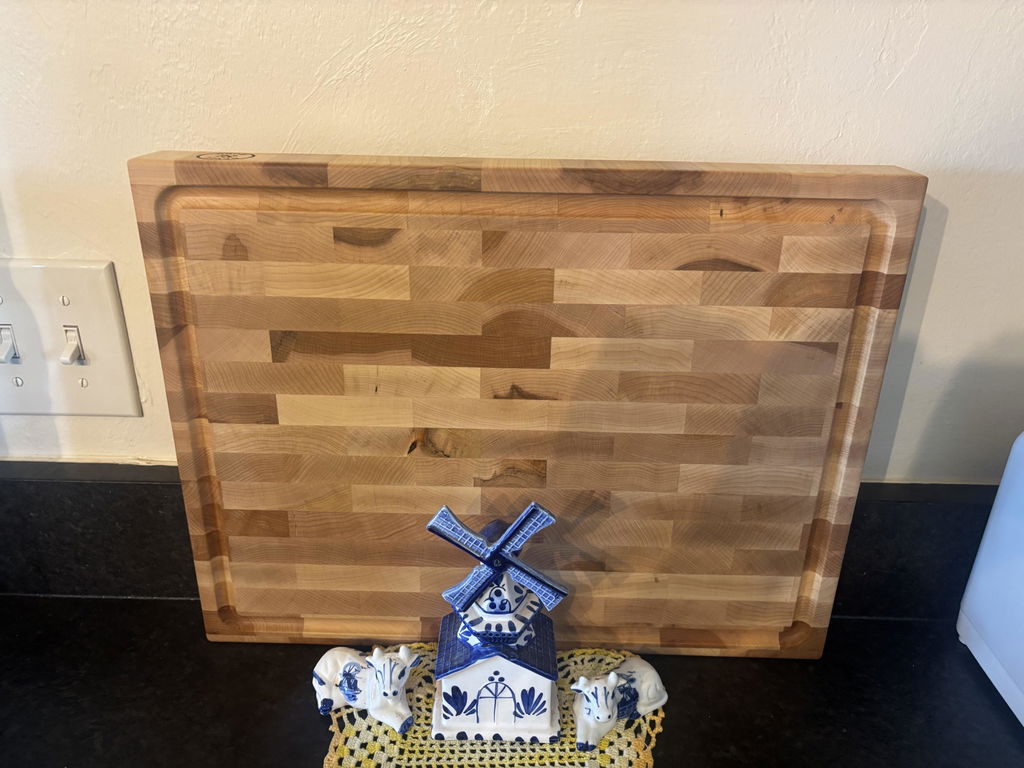
What Is an End-Grain Cutting Board? (Quick Answer)
An end-grain cutting board is made by arranging wood blocks so the grain points upward, creating a hard-wearing surface that's gentle on knives and extremely durable. End-grain boards last longer, resist warping, and preserve knife edges better than other board types — making them the top choice for chefs and home cooks.
Why End-Grain Cutting Boards Are in a Class of Their Own
In the world of premium kitchen tools, few items earn as much respect as a well-crafted end-grain cutting board. More than a surface for slicing and chopping, an end-grain board is a long-term investment in your cooking experience — admired for its durability, knife protection, and striking natural beauty.
Often referred to as the “workhorses” of the kitchen, end-grain boards outperform standard wooden, bamboo, and plastic boards on nearly every metric: longevity, performance, food safety, and even aesthetics.
In this guide, we’ll explore why end-grain boards provide unmatched value, how they’re constructed, and the best ways to use them in your kitchen.

1. What Makes End-Grain Boards Unique
If you’ve ever seen a cutting board with a checkerboard-style pattern, there’s a strong chance it’s end-grain. This design isn’t just about looks — it’s rooted in engineering and woodworking science.
How End-Grain Construction Works
End-grain boards are made by arranging small wooden blocks so that the cut ends of the wood fibers face upward. This exposes the grain vertically instead of horizontally.
Unlike edge-grain or face-grain boards, which expose the long side of the wood fibers, end-grain construction reveals the natural structure of the tree itself.
The Key Benefits of Fiber-Up Orientation
- Knife blades glide between the grain fibers, rather than cutting directly across them.
- The surface scars less, gently closing after each cut.
- They are more resistant to warping and cracking, even with frequent use.
- The end-grain pattern is striking, giving each board a distinctive, artisan-made look.
Why Chefs Love the Design
End-grain isn’t just visually appealing — it’s designed with performance in mind. Professional chefs often refer to end-grain as the “best surface you can give your knives.”

2. Durability and Longevity: Built for Long-Term Use
If you want a durable, repairable cutting surface, end-grain can be a strong choice.
Why End-Grain is the Most Durable Option
- The vertical fibers compress under impact, reducing deep gouges.
- The board absorbs force rather than resisting it, preventing structural damage.
- The construction mimics traditional butcher blocks used in professional meat processing for over a century.
A properly cared-for end-grain board can provide a long service life, though results vary with construction, environment, use, and maintenance.
Care Tips to Preserve Longevity
To maximize lifespan:
- Clean gently by hand with warm water and mild soap.
- Never soak or dishwash — moisture is the enemy.
- Re-condition with Bevel & Bond Board Balm every 3–4 weeks.
- Store upright to encourage even airflow and avoid warping.
With proper maintenance, an end-grain board will look better every year as it develops a rich patina.

3. Knife-Friendliness: The #1 Reason Chefs Prefer End-Grain
If you own quality knives — whether German steel, Japanese blades, or a professional chef’s knife — your cutting board plays a major role in protecting them.
End-grain boards are the gold standard for knife preservation.
Why Knife Edges Last Longer on End-Grain
- The fibers separate and accept the blade rather than resisting it.
- The cutting action feels smoother and more controlled.
- Less friction means less dulling, requiring fewer sharpening sessions.
Who Benefits the Most?
- Professional chefs who chop for hours each day
- Knife enthusiasts who want to protect high-end blades
- Everyday home cooks who want smoother slicing and less resistance
Compared to edge-grain or plastic boards, end-grain surfaces reduce knife dulling dramatically — an essential benefit if you rely on precision in the kitchen.

4. Value and Investment: Why End-Grain Is Worth the Price
End-grain boards typically cost more than edge-grain boards or mass-produced alternatives. But the price difference reflects the level of craftsmanship involved — and the value they deliver over time.
Why End-Grain Costs More
- They require labor-intensive joinery and precision cutting.
- They use more hardwood materials.
- Every board must be tightly glued and leveled for stability.
- Appearance matters — each one is made to look striking on display.
Why They’re Worth Every Dollar
End-grain boards offer:
- Potentially long, repairable service life
- Superior knife protection
- A handsome look that suits any kitchen
- Sustainable, American hardwood craftsmanship
- A hard-wearing surface that’s easy to keep clean
A good end-grain board isn’t a disposable kitchen accessory — it’s a long-term culinary investment.
Bevel & Bond maple cutting boards are made from premium American hard maple and built to heirloom quality — designed to be used, loved, and passed down.
5. Best Use Cases for End-Grain Boards
End-grain boards are versatile, durable, and beautiful. Here’s where they truly shine.
Heavy Prep Work
Suited to frequent dicing, chopping, and slicing — the board absorbs impact effortlessly.
Meat Carving
The dense surface resists knife pressure and pairs well with a juice groove for clean carving.
Serving and Presentation
End-grain boards double as elegant serving pieces for charcuterie, breads, fruits and cheese platters.
Entertaining and Hosting
The natural checkerboard pattern becomes a centerpiece in any dining setup.
If you cook often — or love hosting — an end-grain board gives you both performance and presentation in one tool.

Final Thought
End-grain cutting boards are more than just kitchen equipment — they are an essential tool for cooks who value craftsmanship, performance, and longevity. With their hard-wearing surface, knife-friendly fibers, and timeless beauty, end-grain boards outperform every other board style.
Whether you’re a home cook or a professional chef, investing in a premium end-grain board means you’ll enjoy smoother cuts, longer-lasting knives, and a board that ages beautifully over time.
What is an end-grain cutting board?
A board built from wood blocks arranged so the cut ends of the fibers face up, giving that checkerboard look. The blade slips between the standing fibers instead of scraping across them, so the surface scars less and stays gentle on knives. It is the same construction traditional butcher blocks have used for over a century.
Are end-grain cutting boards worth it?
For anyone who cooks often or owns good knives, yes. They cost more because the joinery is labor-intensive and uses more hardwood, but a well-cared-for end-grain board can provide a durable, repairable work surface and double as a serving centerpiece. Value depends on construction, use, maintenance, and how long the individual board remains serviceable.
Do end-grain boards protect knives?
Better than any other board style. The fibers separate and accept the blade rather than resisting it, so there is less friction, less dulling, and fewer sharpening sessions. Edge-grain, plastic, bamboo, and glass all wear an edge faster.
How long do end-grain cutting boards last?
With proper care, end-grain boards can provide a long service life; actual results vary with construction, environment, use, and maintenance. Hand wash, never soak or dishwash, re-condition with a board balm every 3 to 4 weeks, and store upright. Treated that way, the board develops a richer patina every year rather than wearing out.
When was this article last reviewed?
This guide was last reviewed in August 2026 by the Bevel & Bond workshop team and reflects our current view on end-grain cutting board value and use.
Ready for a board built for durable service? Explore the Bevel & Bond collection of American hard maple end-grain cutting boards.
Keep reading
- End-Grain vs. Edge-Grain: The Cutting Board Showdown
- Maple Butcher Block vs. Cutting Board: What’s the Difference?
- Best Maple Cutting Board 2026: A Craftsman’s Buying Guide
Ready to choose your board? Explore the Bevel & Bond End-Grain Maple Cutting Board, or browse all our cutting boards.