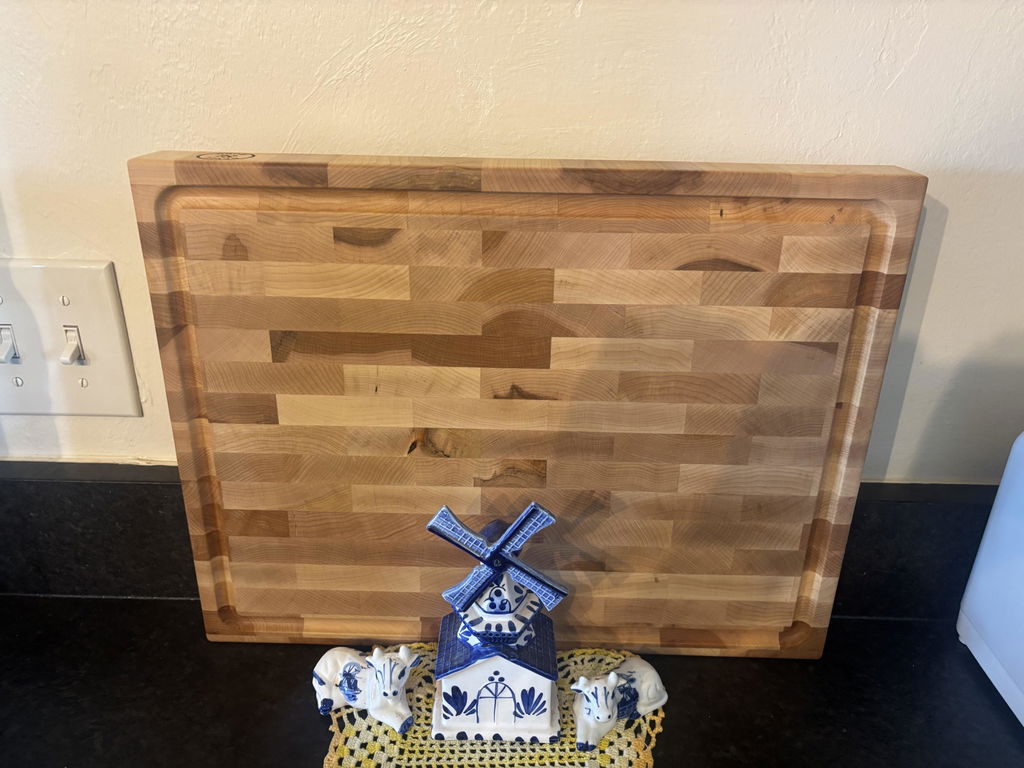
American-made hardwood boards can offer clear species and production disclosures, but country of origin alone does not determine lifespan. Construction, materials, use, and care all matter. Domestic maple, walnut, and cherry are dense, close-grained woods joined with food-safe glue and built thick enough to resist warping. Imported boards vary widely in species, adhesive disclosure, construction, and quality control; evaluate the actual product specifications rather than origin alone. You pay more once, or less several times — that's the whole trade. Domestic species also dominate the list of best hardwoods for cutting boards, and that's not a coincidence.
Looking for a specific recommendation rather than the reasoning? Our pick is in the best made-in-USA cutting board under $150. This page covers why domestic hardwood is worth buying at all.
American hardwood vs. imported boards at a glance
| American hardwood | Typical import | |
|---|---|---|
| Species | Hard maple, black walnut, cherry | Bamboo, acacia, rubberwood, mixed filler |
| Grain | Tight and closed | Open, fibrous, or interlocked |
| Adhesive | Food-safe PVA, disclosed | Often undisclosed |
| Thickness | 1.5–1.75 in typical | Frequently under 1 in |
| Drying | Kiln-dried to stable moisture content | Variable |
| Lifespan | Varies with construction, use, and care | A few years |
| Repairable | Sand flat and re-oil indefinitely | Usually not worth it |
| Up-front cost | Higher | Lower |
| Cost per year of use | Lower | Higher |
Cutting boards come from everywhere now — from cheap bamboo imports to carefully produced hardwood boards made in the USA. While imports may look appealing at first glance, there are many reasons chefs, home cooks, and serious food lovers prefer American-made cutting boards.
From superior hardwoods to clearer material and production disclosures, investing in a U.S.-crafted board is about more than just kitchen gear — it's about choosing quality, sustainability, and craftsmanship designed for durable service.
1. Premium Hardwood Sourcing

-
Walnut: Rich, dark chocolate tones with a premium look. Gentle on knives at 1,010 lbf Janka and highly resistant to deep gouges.
-
Maple: A classic, light-colored hardwood with a fine, tight grain, at 1,450 lbf Janka. Durable, sanitary, and the top choice for maple cutting boards built for everyday prep.
-
Cherry: Warm reddish tones that deepen with age at 950 lbf Janka, developing a natural patina that adds character over time.
These woods are prized for their tight grain, long lifespan, and lasting beauty — qualities you won't find in bamboo or softwood alternatives. If you want the full hardness picture across species, our guide to the Janka scale explains why harder is not automatically better.
2. Built to Last

Unlike mass-produced imports, USA-made boards are:
-
Thicker and sturdier, resisting warping and cracking.
-
Handcrafted with precise joinery, ensuring long-lasting seams.
-
Offered in end-grain and edge-grain construction to balance knife-friendliness and durability.
With proper care, a well-made hardwood board can last a long service life when properly maintained, though service life varies by product, use, and care. The construction difference is covered in our guide to end-grain vs. edge-grain boards.
3. Food Safety Standards

Reputable USA makers build to the food-contact rules the FDA sets for materials that touch food. In practice that means:
-
Only food-safe glues and finishes are used. The mineral oil used to condition a board is permitted for direct food contact under 21 CFR 172.878.
-
Boards are kiln-dried to a stable moisture content, so they resist movement and cracking.
-
Conditioners like our Board Balm are made from ingredients cleared for kitchen use.
Imported boards often lack this level of oversight, which can result in undisclosed adhesives, coatings, or treatments. Worth being precise here: there is no government “certification” for a cutting board itself — what is regulated is the materials that contact your food.
4. Supporting Local Craftsmanship

When you buy American-made, you're not just getting a board — you're:
-
Supporting local woodworkers and small-batch artisans.
-
Encouraging sustainable forestry practices.
-
Investing in the U.S. economy.
Every Bevel & Bond board, for example, represents pride in craftsmanship and sustainable sourcing. It's more than a product — it's a piece of American tradition.
5. True Value for Money
Imported boards may be cheaper upfront, but they often:
-
Use inferior glues or filler woods that break down.
-
Warp or split within a few years.
-
Require frequent replacement.
By contrast, an American-made cutting board:
-
Costs more initially, but lasts far longer.
-
Offers superior performance with less knife wear.
-
Becomes a trusted tool and centerpiece in your kitchen.
Over time, an American hardwood board isn't just a purchase — it's an investment in quality and reliability.
Final Thought
Choosing an American-made cutting board means choosing:
-
Premium hardwoods like walnut, maple, and cherry.
-
Food safety standards you can trust.
-
Sustainable, small-batch craftsmanship.
-
A product built for long-term use with proper care.
Whether you're a professional chef or a passionate home cook, a U.S.-crafted board is the foundation of a quality kitchen.
Explore Bevel & Bond's hard maple end-grain cutting board — produced in the USA
Get Your Bevel & Bond Cutting Board Today!
Ready to invest in a cutting board that will stand the test of time? Visit our Shop today and choose from our premium hard maple end-grain cutting board, produced in the USA.
Why are American-made cutting boards better than imported ones?
American-made boards use domestic hardwoods, tighter joinery, and food-safe finishes. Many imports rely on filler woods and undisclosed glues that warp or delaminate within a few years. A well-made USA board is thicker, kiln-dried, and built to hold up to daily knife work for many years with proper care.
What hardwoods are used in USA-made cutting boards?
The three most common are hard maple, American walnut, and cherry. Hard maple (Acer saccharum) has a tight, sanitary grain at Janka 1,450 lbf, walnut brings dark color and a slightly softer feel at 1,010 lbf that is gentle on knives, and cherry at 950 lbf warms and deepens into a patina over time. All three are dense, close-grained hardwoods that outlast bamboo and softwoods.
Are American-made cutting boards food safe?
Yes, when the maker uses cleared food-contact materials. That means food-safe glues, kiln-dried lumber, and conditioners made from ingredients permitted for food contact. Our boards are joined with food-safe PVA glue and finished with a food-grade mineral oil and beeswax balm.
How long does an American hardwood cutting board last?
With regular oiling and flat storage, a quality American hardwood board can provide a long service life when properly maintained. The dense grain resists gouging, and the thick stock resists warping and cracking. Some lower-cost boards may require earlier replacement, but cost per year depends on the individual board's construction, use, care, and actual lifespan.
Are American-made cutting boards worth the higher price?
Yes, because you pay once instead of replacing a cheap board repeatedly. A USA board runs more upfront but delivers better knife feel, real material oversight, and a potentially long, repairable service life. Spread across the years of use, it is the lower cost per year and a better tool on the counter.
What is the best made-in-USA cutting board under $150?
A thick end-grain hard maple board with a named species and a warranty behind it. We cover the specific picks in our made-in-USA under $150 guide.
When was this article last reviewed?
This guide was last reviewed in July 2026 by the Bevel & Bond workshop team.
Sources
- The Wood Database — Hard Maple (Acer saccharum), Janka hardness 1,450 lbf
- The Wood Database — Black Walnut (Juglans nigra), Janka hardness 1,010 lbf
- The Wood Database — Black Cherry (Prunus serotina), Janka hardness 950 lbf
- 21 CFR 172.878 — White mineral oil, sold as food-grade and intended for cutting-board care
Choose a durable board and maintain it for long-term use. See our USA-made end-grain maple cutting board, hard maple with a 5-year warranty, or browse the full collection.
Keep reading
- Best Made-in-USA Cutting Board Under $150
- Solid Maple, No Compromise: How a Real Cutting Board Is Built
- Best Maple Cutting Board 2026: A Craftsman's Buying Guide
- Maple Cutting Boards: Benefits, Care Tips, and How Patina Makes Them Better Over Time
Ready to choose your board? Browse all our cutting boards.